Sustainability Scholars collaborate on research that results in a better world
Do meaningful environmental research as a first- or second-year undergraduate
The Sustainability Scholars program pairs selected undergraduate students with world-class faculty mentors to start researching sustainability issues as soon as their first semester at IU. In addition to gaining meaningful research experience and mentorship, students receive a $500-per-semester scholarship.
Students share their research at the Sustainability Symposium on April 30, 2024 at IU Bloomington.Photo by Chris Meyers, Indiana University
What do Sustainability Scholars do?
Students selected as Sustainability Scholars will receive a $500 scholarship each semester, based on successful work with their assigned mentor. To remain in good standing, scholars must:
Engage in 8 to 10 hours per week of research with their assigned mentor
Attend the Sustainability Scholars orientation
Meet regularly with their mentor from mid-fall until the end of the spring semester
Collaborate with a faculty mentor to create an approved research work plan by the end of the fall semester
Enroll in the 2-credit hour, spring semester Sustainability Scholars course
A lot of my professional connections I've made because I got this confidence boost my freshman year.
Lauren Ulrich, Media School, class of 2024, Sustainability Scholar 2020–21
Sustainability Scholars' success starts years before graduation
Avian researcher's career flies high with prestigious national scholarship
Freshman research on bird health expands to passion project, career
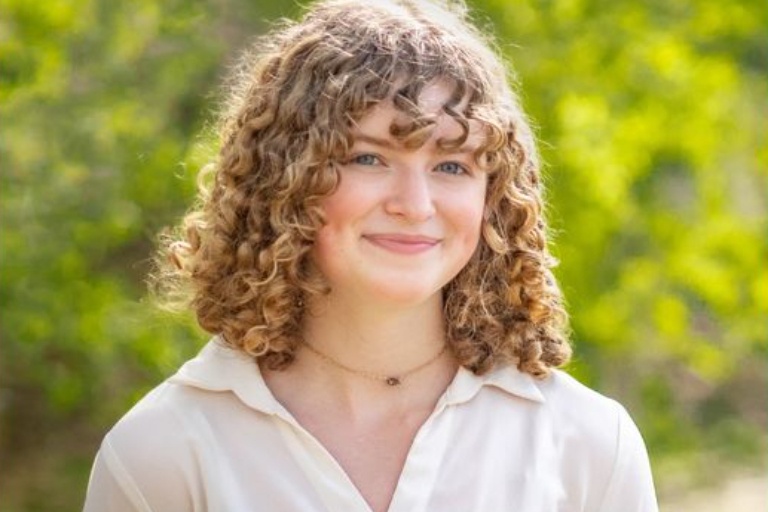
Malaak Alqaisi, B.S. in biology, minor in environmental science, class of 2026, received one of less than 450 Goldwater scholarships awarded nationally in 2024-2025, which is given to STEM students building a research career. Alqaisi began hers under the wing of Guggenheim Fellow Dr. Ellen Ketterson, professor of biology and co-director of the Midwest Center for Biodiversity, as a Sustainability Scholar. She studied the effects of artificial light at night on dark-eyed junco's immune function. From there, her research continues—with early support from a Sustainability Research Development Grant—as she considers awareness of avian window strikes and how to prevent them.
Extreme heat research drives environmental science student's college career
Once freshman researcher, now part of team converting data into action
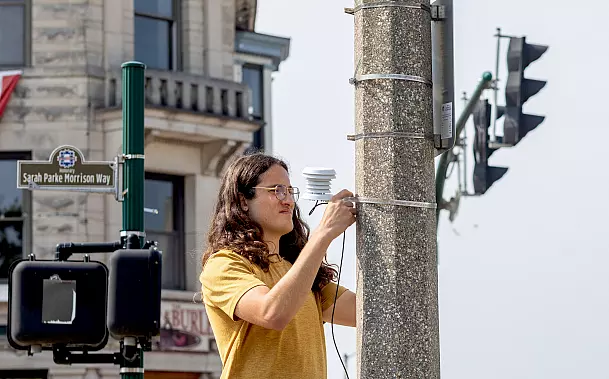
Nick Polak, B.S.E.S. class of 2025, started working with Dr. Dana Habeeb, Luddy School of Informatics, as a 2022–23 Sustainability Scholar. Her team's data-driven efforts are helping the City of Bloomington develop an extreme heat action plan. After the Scholars program, Polak extended the collaboration with a Sustainability Research Development Grant, and is now part of the team at The Healthy Cities Lab.
Alum recognized for environmental journalism research she began as a Sustainability Scholar
Co-authors published paper, receives award
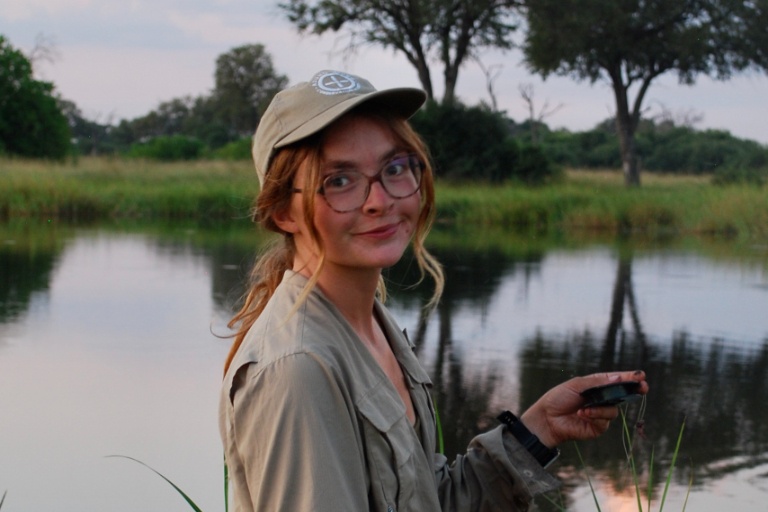
Lauren Ulrich received the 2024 Provost’s Award for Undergraduate Research and Creative Activity for work she began as a 2020–21 Sustainability Scholar. As an extension of the Scholars program, she co-authored a paper with Dr. Suzannah Evans Comfort, The Media School, that was eventually published in Journalism History. In her time at IU, Ulrich went on to work for the Indiana Daily Student, intern at the Arnolt Center for Investigative Journalism, and study abroad in Botswana monitoring wildlife.
Research on sustainability, conflict leads to international study, work
Senegal study-abroad research stems directly from Scholar experience
As a Scholar, Annabel Prokopy, B.S. in geography class of 2026, explored peacebuilding through sustainable resource management, with Senegal as her primary example. Later selected to study abroad through O'Neill International, she was able to visit Senegal, and to deepen her research into the intersection between sustainable community forest management and conflict mitigation in the aftermath of the Casamance insurgency. Since then, Prokopy has also received a Tobias Internship Scholarship to map social services in Kenya, and she's served the state of Indiana in the McKinney Climate Fellows program.
Project Description: Natural Flood Management (NFM) is a Nature-Based Solution that works to attenuate floods via non-structural approaches that slow water down and increase infiltration through techniques such as reforestation and land management change. While NFM is an appealing idea, its effectiveness is still unclear. Analysis to date includes a lot of modeling and empirical analysis of pilot projects, which have reached the provisional conclusion that NFM can reduce flood peaks, but only for smaller catchments (< 25 km2) and events (10-year flood). Until very recently, however, the computational demands of modeling NFM in larger catchments have been prohibitive, and even in test catchments, NFM approaches have been employed on only a small fraction of the watershed. The absence of modeling or empirical evidence for large scale NFM implementation creates a Catch 22: without evidence of its effectiveness, NFM cannot be widely deployed, but until it is widely deployed it cannot be proven effective.
Our proposed project seeks to escape this Catch-22 through analysis of historical cases in the US where techniques that would today fit under the umbrella of NFM were put in place: catchment areas where erosion prevention measures promoted by the Soil Conservation Service were broadly implemented. Over the next year, the undergrad researcher on this project will work with Rebecca Lave (IU Geography) on archival research to identify catchments that had both a high degree of take up of erosion prevention measures and US Geological Survey stream gauge(s). We will then conduct basic hydrological analysis of the stream gauge data to see if the erosion prevention measures had any affect on flood peaks.
Desired skills and interests: Ideally, the undergrad researcher on this project would be interested in environmental history and/or hydrology. Much of the work will be archival, but we will also be looking at US Geological Survey stream gauge data.
Project Description: It is hard for people to relate to climate data and projections about the climate, even when they are shown the data in forms that are intended to be broadly understood (e.g., IPCC, 2023). One way to better relate to how individual behaviors, community practices, governance, and enterprise practices are implicated in environmental resilience is to share photographic images taken purposefully to illustrate such behaviors and practices on the IU campus and in and around Bloomington. I have written about this extensively over two decades, both as scholarly papers and pictorial essays. In my area of Human-Computer Interaction (HCI), and sub-area of Sustainable Interaction Design (SID aka SHCI), pictorial papers are treated as archival and double-blind peer reviewed in the same way as text-oriented papers. I will mentor the undergraduate researcher to take and collect photographs as described above. I will ask the researcher to use these photographs as input to generative AI systems to picture alternative futures, from successful climate care to breakdown.
There are several competitive, double-blind peer-reviewed venues for pictorial essays in HCI with due dates between February and August each year affiliated with or sponsored by the Association for Computing Machinery (ACM). I expect to work with the researcher (and perhaps other peers or colleagues associated with IPE) to submit a pictorial essay based on the collections and GAI illustrations described above to one of the ACM venues. The finished work will also be highly suitable for the annual Sustainability Symposium, and it may be shared with a consortium of European colleagues working on curriculum for Sustainable Interaction Design under an Erasmus+ grant—I am an advisor/associate partner in this group.
Project Description: Extreme heat events are responsible for more annual fatalities in the United States than any other form of extreme weather. This research project is part of an NSF CRII grant with the aim to monitor near-surface air temperatures in Bloomington, IN. The sustainability scholar will support an ongoing project which is establishing an environmental sensor network on the IU campus and throughout Bloomington. Temperature, relative humidity, and soil moisture sensors have been deployed in differing urban form environments (e.g., streets, parking lots, and community gardens) in order to measure how these environmental variables differ and change during heat waves. The project also aims to inform users of environmental exposures that are harmful to their health and design interactive technologies to better engage and inform users. Currently we have a new interactive dashboard for the sensor network and we are working to better understand both the utility of the overall sensor network and design tools. The student will help to manage the current sensor network, install new sensors, and engage with community stakeholders at a community garden and community orchard.
This research project aims to deploy environmental sensors in order to investigate the following main research objectives:
To investigate how temperatures change in differing urban environments.
To investigate how to communicate local environmental information to targeted stakeholders.
To evaluate a real-time interactive dashboard built from the sensor network, assessing usability, accessibility, and opportunities for future design improvements.
Help design new interactive tools associated with warning systems and storytelling.
The work planned includes:
Surveying existing literature regarding environmental sensing and interactive dashboards.
Maintaining the current sensor network through data collection, maintenance, and new sensor installations.
Engaging with local stakeholders at a community garden and community orchard.
Conducting focus groups and design sessions with stakeholders to evaluate the dashboard, understand usability needs, and identify new design trajectories for high-density sensor networks.
Desired skills and interests:
Interest in environment, climate change, and sensors.
Interest and/or experience with working with large datasets, and outdoor fieldwork.
Interest and/or experience working with quantitative data, including visualization.
Interest in human-centered design, usability evaluation, or participatory methods.
Experience with coding, spatial analysis software like ArcGIS, and design tools like Figma is a plus.
Project Description: Changes in climate and anthropogenic influence are rapidly altering the environments in which plants and soil microbes live. Since plants and soil microbes form symbiotic relationships (e.g., mutualism, commensalism, and parasitism), it is imperative that we understand how global changes influence plant-microbe interactions. The fellow will work with the Lau lab on a greenhouse and/or field experiment to answer one of the following questions: 1) how beneficial bacteria like rhizobia influence plant growth, 2) how environmental effects like shade influence competition between plant species, 3) how fire influences effects on soil bacteria and fungi influence the evolution of plant traits, or 4) how long-term nitrogen fertilization influence the evolution of annual plants. By January, the fellow will have conducted a greenhouse experiment and collected data that can be analyzed during the spring semester in preparation for the spring post session.
Desired Skills and Interests: Interest in ecology, botany, microbiology, and/or global change biology. Attention to detail, excellent work ethic, strong organizational skills for keeping track of experimental samples, and the ability to collaborate and work cohesively with lab personnel.
Project Description: Understanding how multiple species are sustained in the local environment is a key goal of community ecology. One way that several species can be sustained in a community is via niche differentiation, where different species utilize different abiotic and biotic resources, avoiding competition. A well-recognized form of niche differentiation is differences in food preference. In such a scenario, different species can coexist in a community by utilizing different food resources. Parasites are important players in any community. They impact host fitness and can lead to cascading effects across entire food webs. Understanding what factors influence parasite sustainability in a community is a key step to unraveling how such parasites may be affecting the surrounding community. The goal of this project is to test if different entomopathogenic nematode species, found in the woodlands of Indiana, are coexisting via utilization of different host species. These nematodes are found in the soil where they search for insects to infect, taking up their resources and reproducing inside them. Soil core samples will be collected along a hillside where prior work has been done. These soil cores will be split into three parts where two parts will be used to bait nematodes out of the soil with insects, and the third will be processed through a Baermann funnel to see what nematode species are present in the soil. If different nematode species are utilizing different insect hosts, then different nematode species will emerge from the different insect species used to bait. Two commercially available insect species, representing two key insect orders utilized by entomopathogenic nematodes, will be used as bait. Briefly, insects will be placed on the soil, if entomopathogenic nematodes are able to colonize the insect, then insects should die in a few days. Dead insects will be transferred to white traps to collect and record nematode emergence from each host species. Nematodes from both the baiting and funnel method will be identified via microscopy and DNA sequencing, allowing us to compare the nematode species that are naturally found in the soil, to the nematode species that emerge from different insect species. If nematode species are utilizing different host species, then different nematode species should emerge from different insect species. If this is the case, then niche differentiation in the form of host preference is a factor in entomopathogenic nematode sustainability.
Desired Skills and Interests: Student should have an interest in community ecology, parasites, insects, and conducting field and wet lab work. Student must be comfortable with working outside, handling soil and insects, and following and learning new skills.
Project Description: The Ross Sea Marine Protected Area (MPA) is the world’s largest MPA. Established by the Convention for the Conservation of Antarctic Marine Living Resources (CCAMLR), the Ross Sea MPA is in the remote international waters of the Antarctic Treaty region. The Ross Sea Research Coordination Network (RCN) seeks to build community, coordinate research, and ultimately influence policy decision making regarding the Ross Sea MPA over the next four years, to improve how scientists and other Ross Sea actors contribute to MPA decision making. Working with a science anthropology team, the Sustainability Scholar on this project will: 1) learn about the conservation context of environmental spatial management in the Antarctic, 2) transcribe, code, and analyze Ross Sea MPA RCN member interviews to understand how RCN participants experience and contribute to the RCN.
Desired Skills and Interests: no experience necessary, preference for students interested in humanities or interpretive social sciences, interest in international environmental science and policy.
Project Description:Hudson River Sloop Clearwater is a member-supported environmental education and advocacy organization founded in 1966 by American folksinger Pete Seeger and others. Its mission is to protect the Hudson River by inspiring lifelong stewardship of the river and its tributaries with innovative advocacy through education programs. In 1969, the Sloop Clearwater, a 106-foot replica of 19th century cargo ships on the Hudson was launched. In the ensuing 56 years, the sloop has carried tens of thousands of school children and members of the public on its educational and community-based sails. The organization has seen the Hudson River’s transition from an open sewer to a swimmable, accessible waterway and a reduction in the discharge and effects of toxic pollutants. Clearwater has been dubbed “America’s Environmental Flagship” and in 2004 it was listed on the National Register of Historic Places. Members of the Clearwater community have recently engaged in examining the organization’s history and an associated archive. This proposed project will complement hose activities and asks two questions: 1) In what ways does understanding an organization’s history help in defining its course and sustaining it into the future? and 2) what lessons and models for education and action are found in a study of Clearwater’s past? These questions will be explored through an oral history project designed to complement other efforts underway regarding Clearwater such as an administrative history and archive maintenance. The sustainability scholar will work with the faculty mentor, current and past members of Clearwater’s board of directors and staff to identify key questions to be included in oral history interviews as well as a working list of potential respondents. During the 2025-2026 academic year, the scholar will conduct interviews and engage in analysis of data to seek insights on the stated research questions. By spring of 2026 the scholar will have conducted at least 20 oral history audio/video interviews, data-checked automatic voice-to-text transcriptions, and conducted analysis with a qualitative research platform such as Dedoose. Initial findings will be presented at the IU Sustainability Symposium. The faculty member is a former staff and board member and long-time supporter of Clearwater. This project falls within his program of research on sustainability-related environmental education and advocacy, the scholarship of learning and teaching in non-formal settings, and sustainability and community health lessons gleaned from studying the past.
Desired Skills and Interests:
Interest in sustainability-related environmental education
Interest in community-based environmental advocacy
Interest in developing an understanding of and comfort with the acquisition and analysis of qualitative data
Ease in speaking with diverse respondents
Interest in developing skills managing technology applications (such as Zoom, text transcription software, video processing, cloud-based applications & storage)
Organizational skills, particularly in project management and record keeping
Curiosity
Flexibility with schedules, diverse respondents, and emergent data from interviews
Ability to categorize data and draw lessons from individual and collective oral histories
Interest in and commitment to grass-roots activism
Interest in aquatic/estuarine/marine ecology
Interest in American folk music
Mentor: Jessica Eise, Environmental and Occupational Health
Project Description: General mental models refer to how we develop schemas of what something is and how it relates to something else that helps us respond to new situations (Bartlett & Bartlett, 1995; Fiske & Linville, 1980). Popular narratives, or simple explanatory stories, can steer mass opinion, societal behavior (Shiller, 2020) and can influence how we process and respond to issues (Chong & Druckman, 2007; Entman, 1993). In the United States, US adults’ mental models tend to frame climate change as a phenomenon of distant impact, such as melting ice and endangering animal species (Leiserowitz, 2006; Smith & Leiserowitz, 2012). However, this is not considered the most effective frame, as people who see environmental issues through a moral lens instead tend to hold stronger pro-environmental attitudes and behavioral intentions (Markowitz, 2012; Wang, 2017). It has been suggested that future research could test what moral appeals resonate best with different audience segments (Goldberg et al., 2020).
Desired Skills and Interests: “They would need to assist with recruitment, interviews, data organization and analysis. It would be a very hands-on data collection experience. They would need to receive partial mentorship from my PhD student and postdoc, in addition to me, just based on my time restrictions due to the book, but I would be sure to have a strong hand in it.” - Jessica Eise
Mentor: Jessica Eise, Environmental and Occupational Health
Project Description: On a societal level, norms can be conceptualized as vicious and virtuous cycles of collective behavior (Nyborg et al., 2016), and one such current norm is that most people do not talk to their friends and family about climate change (Leiserowitz et al., 2020). Yet, social norms have been repeatedly shown to be some of the most powerful interventions for encouraging pro-environmental behaviors (Abrahamse & Steg, 2013; Nisa et al., 2019; Farrow et al., 2017; McDonald & Crandall, 2015; Nyborg et al., 2016; Rhodes et al., 2020; Wolske et al., 2020). Evidence suggests that interventions related to social norms need to be long-lasting (years as opposed to months) and with people or groups with whom an individual maintains regular contact (Goldberg et al., 2020). Currently, people generally underestimate pro-climate norms (Mildenberger & Tingley, 2019), thereby correcting people’s perception of the norm can be a powerful gateway to social change (Tankard & Paluck, 2016; Van der Linden et al., 2019). Questions remain around how different groups and individuals decide over time which norms to follow, and which norms to ultimately make their own (Goldberg et al., 2020).
Desired Skills and Interests: “They would need to assist with recruitment, interviews, data organization and analysis. It would be a very hands-on data collection experience. They would need to receive partial mentorship from my PhD student and postdoc, in addition to me, just based on my time restrictions due to the book, but I would be sure to have a strong hand in it.” - Jessica Eise
Project Description: Zero Waste Planning for IU Athletic Facilities offers an exciting opportunity for students to contribute directly to the university's sustainability efforts by using the campus as a living laboratory to address critical waste management challenges in athletic venues, namely Memorial Stadium and Simon Skojdt Assembly Hall.
This project will gather essential data to inform IU goals for waste reduction and management. Key tasks involve benchmarking IU's waste reduction goals and progress against Big 10 Peers and conducting a thorough waste audit of athletic venues on the IU Bloomington campus, consistent with peer methods and existing 2019 IU Waste Study and O'Neill data. The audit will map materials within each waste stream, assessing tonnage, types, and potential sources, and identify compostable contents. A crucial outcome will be the development of a methodology for conducting waste inventories at other IU Campuses. By the end of the academic year (Spring 2026), expected outcomes include a comprehensive understanding of IU Bloomington's athletic venue waste stream contents and origins, an analysis of GHG emissions associated with the waste stream, a cost analysis of disposed materials , and actionable recommendations for improving waste management and moving towards zero waste facilities - including educational, engagement, and operational strategies.
Desired Skills and Interests:
Skills: Data and financial analysis, research, time management, report and proposal development, collaboration, teamwork, positive attitude
Interests: Sustainability in athletics, recycling/reuse, compost/food waste, comfort with working in conditions that vary in temperature and smell
Other desired qualifications: Preferred candidates:
have the ability to become an approved, university driver;
pass a university background check consistent with employment;
have an interest in and ability to transition into an hourly, paid, student internship role with the Office of Sustainability at the culmination of the Sustainability Scholars program
Mentor: Owen Wu, Business Operations & Decision, Kelley School of Business
Project Description: Water scarcity has emerged as a critical challenge in many regions across the globe. One solution—turning seawater into drinking water, known as desalination—has already helped people in many countries. But there’s a catch: while effective at addressing water shortages, large-scale desalination poses environmental challenges, including impacts on marine ecosystems and, notably, substantial energy consumption. In some cases, efforts to solve water scarcity risk worsening energy supply challenges or increasing greenhouse gas emissions.
This project will explore how we can solve water and energy challenges together instead of trading one problem for another. We’ll collect and compare data on desalination plants around the world, looking at how much energy they use, how they connect to local power grids, and whether they use renewable energy. We’ll also search for examples where water and energy solutions work hand in hand to minimize the energy footprint while maintaining water supply security. We will gather and analyze publicly available data, policy reports, and case studies, producing a comparative assessment of global practices. By spring semester, the research will yield an evidence-based set of recommendations for designing desalination strategies that address water needs without exacerbating energy challenges.
Desired Skills and Interests: Interest in sustainability, climate solutions, and clean energy; curiosity about desalination technologies and how they affect the environment; interest in reading policy and technical reports, basic skills in data collection, organization, and analysis; excellent communication and writing skills for synthesizing findings.
Project Description: Bugs, such as mosquitoes and ticks, can make us sick. With climate change, we will have more and different bugs in Indiana. That will have an increasingly bad effect on human health. We are working on research to connect data about bugs to human cases of infectious disease, such as West Nile, Malaria and Lyme Disease. Our end goal is to develop systems that track and predict trends for these diseases by connecting data about the climate, bugs and human health. Your job would be to help us understand what data we have about these areas, how to connect them, and what kind of research and applied questions we could ask. You will be part of a multidisciplinary research team that is working on that.
Desired skills and Interests: We are looking for someone with a strong interest in climate change, human health and, ideally, biology (and, even more ideally, entomology). Good literature research, critical thinking and writing skills are essential. And, the ability to work with different data and think conceptually is a plus.
Project description: Are you a passionate undergraduate student ready to tackle one of the most urgent challenges in modern healthcare? Join the American Medical Informatics Association Climate, Health and Informatics Working Group to help develop a micro-credential in sustainability informatics, a groundbreaking initiative dedicated to reducing healthcare's significant environmental footprint. This is a unique opportunity to use your skills to create high-quality, actionable educational content for clinical and operational leaders, and help them use data and informatics to reduce pollution and advance sustainability efforts. You'll be at the forefront of this emerging field, making a tangible impact on the future of a more environmentally responsible healthcare system.
Desired Skills and Interests: We are looking for someone with a strong interest in climate change, human health and, ideally, teaching/learning/instructional design. Good literature research, critical thinking and writing skills are essential. And, the ability to work with different data and think conceptually is a plus.
Project Description: In this project we are looking to work with and learn from a sustainability scholar who can understand, document, and evaluate narratives that are found in online and interview discourses about large scale solar projects in the U.S. This project is underway and a collaboration across many faculty and three universities. Key tasks would be to identify narratives, assess how prevalent they are, document where they are found, and code themes related to the narratives assessing them. Expected outcomes are to investigate what kinds of themes and narratives emerge across different large scale solar sites in the U.S. and how they may shape support or opposition.
Desired Skills and Interests: detail oriented, active on social media, grit, willing to work on increasingly complex and evolving subject area.
Project Description: Per- and polyfluoroalkyl substances (PFAS) are a class of persistent and toxic chemicals that are transported through the atmosphere and deposited onto land and water surfaces. These water surfaces are used as drinking water sources and for recreational purposes. If these water bodies become contaminated, both people and biota living in them can be exposed to PFAS. For example, in Indiana there are more than 40,000 artificial ponds that are used for agricultural purposes and many of them are stoked with fish. This project will support the Integrated Atmospheric Deposition Network (IADN)’s work to determine the role of atmospheric deposition in delivering PFAS in the Great Lakes.
The student will assist in laboratory processing of PFAS in water samples from water bodies across Indiana and in precipitation samples from IADN sites and contribute to interpreting these data in the context of climate change and water resource vulnerability. The project supports Indiana’s climate resilience goals by exploring how atmospheric deposition of PFAS may impact drinking water sources, agricultural landscapes, and aquatic ecosystems in a warming climate. Expected outcomes include a better understanding of PFAS transport and deposition pathways, and a research poster presented at the IU Sustainability Symposium.
Desired Skills and Interests:
Interest in environmental health, chemistry, and/or sustainability science
Willingness to learn analytical chemistry laboratory techniques
Careful attention to detail and ability to follow protocols
Background or coursework in chemistry, environmental science, or public health is helpful but not required.
Environment, Society, and Sustainability Institute social media channels