Sustainability Scholars collaborate on research that results in a better world
Do meaningful environmental research as a first- or second-year undergraduate
The Sustainability Scholars program pairs selected undergraduate students with world-class faculty mentors to start researching sustainability issues as soon as their first semester at IU. In addition to gaining meaningful research experience and mentorship, students receive a $500-per-semester scholarship.
To apply to Sustainability Scholars, complete the following steps:
Visit one.iu.edu and search "IU Scholarships." Open the task.
Complete the General Application. If you've already completed it for other scholarships, then you should not need to do so again.
Go to Recommended Opportunities.
Search IUB-Sustainability Scholars Scholarship"
Complete and submit the Sustainability Scholars application.
Students share their research at the Sustainability Symposium on April 30, 2024 at IU Bloomington.Photo by Chris Meyers, Indiana University
What do Sustainability Scholars do?
Students selected as Sustainability Scholars will receive a $500 scholarship each semester, based on successful work with their assigned mentor. To remain in good standing, scholars must:
Engage in 8 to 10 hours per week of research with their assigned mentor
Attend the Sustainability Scholars orientation
Meet regularly with their mentor from mid-fall until the end of the spring semester
Collaborate with a faculty mentor to create an approved research work plan by the end of the fall semester
Enroll in the 2-credit hour, spring semester Sustainability Scholars course
"I am incredibly grateful for the countless opportunities provided by Sustainability Scholars. Being my first lab experience, the program guided me through the process, helped to solve any issues, and inspired me to continue pursuing research. Now, I feel confident in my abilities to ask questions, conduct research in and out of the lab, and confidently present my findings!"
—Hailey Smith, BS in Environmental Science student, class of 2029, and 2025-2026 Sustainability Scholar
Sustainability Scholar Hailey Smith with her mentor, Dr. Farrah Bashey Visser, at the Spring 2026 Sustainability Symposium.
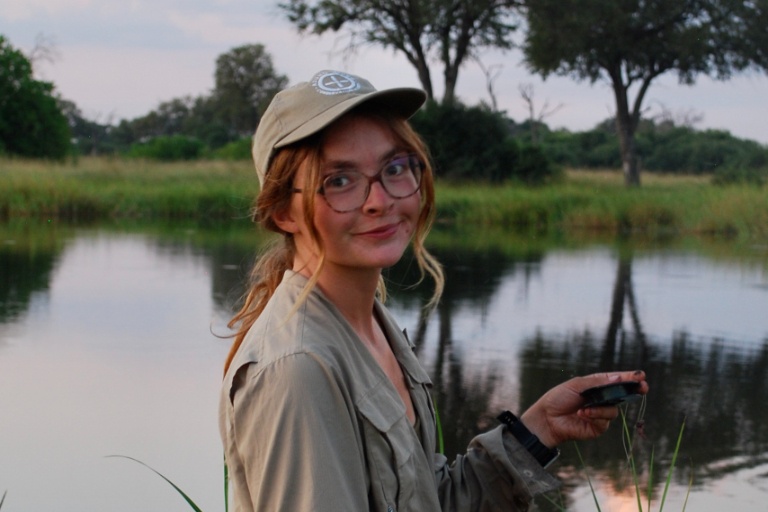
Hailey Smith conducting research in the Bashey Lab on parasite mutualism and how it impacts biodiversity.
Sustainability Scholars' success starts years before graduation
Avian researcher's career flies high with prestigious national scholarship
Freshman research on bird health expands to passion project, career
Malaak Alqaisi, B.S. in biology, minor in environmental science, class of 2026, received one of less than 450 Goldwater scholarships awarded nationally in 2024-2025, which is given to STEM students building a research career. Alqaisi began hers under the wing of Guggenheim Fellow Dr. Ellen Ketterson, professor of biology and co-director of the Midwest Center for Biodiversity, as a Sustainability Scholar. She studied the effects of artificial light at night on dark-eyed junco's immune function. From there, her research continues—with early support from a Sustainability Research Development Grant—as she considers awareness of avian window strikes and how to prevent them.
Sustainability Scholar's research leads to co-authored paper and presentation at prestigious conference
Dani Headley will present her research at the Association for Journalism and Mass Communication's annual conference.
Sophomore Dani Headley, a 2025-26 Sustainability Scholar, has coauthored a paper alongside Assistant Professor Dr. Jessica Eise and Postdoctoral Fellow Dr. Jungyhun Moon. Their paper is titled, “A Concept Mapping Approach to the Effects of Climate Narratives: Moral Reconfiguration in Climate Mental Models and Climate Action Intentions.” It has been accepted for presentation at the 2026 AEJMC Annual Conference in New Orleans, Louisiana.
Alum recognized for environmental journalism research she began as a Sustainability Scholar
Co-authors published paper, receives award
Lauren Ulrich received the 2024 Provost’s Award for Undergraduate Research and Creative Activity for work she began as a 2020–21 Sustainability Scholar. As an extension of the Scholars program, she co-authored a paper with Dr. Suzannah Evans Comfort, The Media School, that was eventually published in Journalism History. In her time at IU, Ulrich went on to work for the Indiana Daily Student, intern at the Arnolt Center for Investigative Journalism, and study abroad in Botswana monitoring wildlife.
Research on sustainability, conflict leads to international study, work
Senegal study-abroad research stems directly from Scholar experience
As a Scholar, Annabel Prokopy, B.S. in geography class of 2026, explored peacebuilding through sustainable resource management, with Senegal as her primary example. Later selected to study abroad through O'Neill International, she was able to visit Senegal, and to deepen her research into the intersection between sustainable community forest management and conflict mitigation in the aftermath of the Casamance insurgency. Since then, Prokopy has also received a Tobias Internship Scholarship to map social services in Kenya, and she's served the state of Indiana in the McKinney Climate Fellows program.
Mentor: Jessica Nevitt, Senior Lecturer, Kelley School of Business, Department of Communication, Professional, and Computer Skills
Project Description: Organizations are increasingly expected to establish environmental responsibility, yet sustainability claims often receive more intense public scrutiny during organizational crises such as environmental accidents, product recalls, labor disputes, or allegations of unethical practices. This project will examine how organizations communicate sustainability commitments during and after crises and explore how stakeholders can distinguish authentic communication from perceived "greenwashing." The undergraduate researcher will collect publicly available corporate sustainability reports, press releases, CEO statements, and social media posts from organizations that have experienced sustainability-related controversies or crises. With assistance, the student will develop and apply a coding framework to identify communication strategies such as transparency, accountability, empathy, evidence-based claims, stakeholder engagement, and measurable sustainability commitments. The project will produce a dataset describing common communication patterns and identify characteristics associated with more credible sustainability messaging. By April 2027, the student will present findings through a research poster and may later have the opportunity to contribute to possible future publication based on their findings.
Desired skills and interests:
Interest in business communication, public relations, sustainability, or organizational leadership
Curiosity about corporate communication and current events
Strong reading and writing skills
Attention to detail and willingness to learn qualitative content analysis
Mentor: Mansur Khamitov, Assistant Professor & Chris Olivola, Associate Professor; Kelley School of Business, Department of Marketing
Project Description: Consumer waste (e.g., discarding food, clothing, etc.) is a major obstacle to sustainability, yet the US alone wastes billions of pounds of food and over 10 million tons of clothing each year, among many other goods. As societies push for more sustainable consumer practices, waste is increasingly seen as a problem that needs to be tackled. An important question, then, is whom people hold responsible (and therefore blame) for consumer waste. Specifically, to what extent do they assign responsibility to the producers (e.g., companies and stores) versus consumers of goods that end up being wasted? Producers could be blamed for creating the goods that are eventually wasted, whereas consumers could be blamed for failing to utilize those same goods that they previously purchased. This project seeks to understand when (i.e., under what conditions) and why (i.e., what psychological processes are involved) people put a greater share of responsibility/blame for waste on producers vs. consumers. Addressing these questions will help us understand whom people—including voters and politicians—consider to be the primary contributors of consumer waste, which in turn shapes sustainability policies and laws (e.g., whether they mainly penalize producers vs. consumers for waste). The project will consist of designing and carrying out a series of survey experiments, in which respondents are presented with various scenarios involving consumer waste, then asked to judge the extent to which they hold each party (e.g., producers vs. consumers) responsible for the waste involved. These scenarios will consider various kinds of waste (e.g., food, clothing, electronics, etc.) and various kinds of actors (e.g., firms vs. stores; individual vs. multiple consumers). They will also vary factors that could potentially affect responsibility attributions (e.g., the amount of goods produced/consumed; whether the firm/consumer [un]knowingly produces/purchases goods that tend to be wasted). The key tasks will involve developing and proof-reading scenarios, creating web-based surveys (with user-friendly survey-tools), organizing and analyzing the resulting data, and providing reports of the findings for each survey experiment.
Desired skills and interests: We are looking for applicants with an interest in behavioral/social science research. Applicants should have experience with—or at least a desire to learn—quantitative research, experimental and survey design, a statistical program, and data analysis. Excellent writing skills is a big plus. Finally, participants must be detailed oriented, have a strong work ethic, and proper time-management skills.
Mentor: Kim Novick, Professor; O’Neill School of Public and Environmental Affairs
Project Description: Of all the ways that climate change is affecting earth's ecosystems, the consequences of increasing drought stress are among the most difficult to predict. Part of the difficulty lies in the way we measure the amount of soil water available to plants. In most research and monitoring settings, we measure the volume of water in the soil. This is an important variable, but it does not fully capture the amount of water that is potentially available for extraction by plants. That quantity - the "soil water potential" - is determined not only by how much water is in the soil, but also the features of soil structure and texture that determine how tightly bound water is to soil matrices. Our lab group is addressing this challenge by generating data that can allow us to predict soil water potential from measurements of soil moisture content across dozens of ecological research sites in the United States. We ship soil collection kits to scientists all over the country, who collect soils and send them back to us for processing in the lab for a range of soil hydraulic measurements. A Sustainability Scholar working with our group will help us execute the measurements, and also to analyze the data so we can better predict how the relationship between soil water content and soil water potential varies across ecosystem types, soil types, and climate gradients.
Desired qualifications: An interest in pursuing a degree in environmental science, biology, earth and atmospheric science, physical geography, or a similar field. Strong organizational skills and a good work ethic. Students who would be interested in a longer-term (and eventually paid) research position in the group are preferred.
Mentors: Brian Forist, Senior Lecturer; Department of Health and Wellness Design, School of Public Health - Bloomington
Project Description:Hudson River Sloop Clearwater is a member-supported environmental education and advocacy organization founded in 1966 by American folksinger Pete Seeger and others. Its mission is to protect the Hudson River by inspiring lifelong stewardship of the river and its tributaries with innovative advocacy through education programs. In 1969, the Sloop Clearwater, a 106-foot replica of 19th century cargo ships on the Hudson was launched. In the ensuing 56 years, the sloop has carried tens of thousands of school children and members of the public on its educational and community-based sails. The organization has seen the Hudson River’s transition from an open sewer to a swimmable, accessible waterway and a reduction in the discharge and effects of toxic pollutants. Clearwater has been dubbed “America’s Environmental Flagship” and in 2004 it was listed on the National Register of Historic Places. Members of the Clearwater community have engaged in an examination the organization’s history and an associated archive. This proposal calls for continuation of work done with the 2025-2026 Sustainability Scholar that has complemented the activities initiated by Clearwater. It continues the exploration of two research questions: 1) In what ways does understanding an organization’s history help in defining its course and sustaining it into the future? and 2) what lessons and models for education and action are found in a study of Clearwater’s past? These questions are being explored through an oral history project designed to complement Clearwater’s deep look at their administrative history and archive. The sustainability scholar will work with the faculty mentor, current and past members of Clearwater’s board of directors and staff to identify key respondents for continued interviews. During the 2026-2027 academic year, the scholar will conduct interviews and engage in analysis of data to seek insights on the stated research questions. By spring of 2027 the scholar will have conducted at least 20 oral history audio/video interviews, data-checked automatic voice-to-text transcriptions, and conducted analysis with the qualitative research platform Dedoose. Findings will be presented at the IU Sustainability Symposium. The faculty member is a former staff and board member and long-time supporter of Clearwater. This project falls within his program of research on sustainability-related environmental education and advocacy, the scholarship of learning and teaching in non-formal settings, and sustainability and community health lessons gleaned from studying the past.
Desired Skills and Interests:
Interest in sustainability-related environmental education
Interest in community-based environmental advocacy
Interest in developing an understanding of and comfort with the acquisition and analysis of qualitative data
Ease in speaking with diverse respondents
Interest in developing skills managing technology applications (such as Zoom, text transcription software, video processing, cloud-based applications & storage)
Organizational skills, particularly in project management and record keeping
Curiosity
Flexibility with schedules, diverse respondents, and emergent data from interviews
Ability to categorize data and draw lessons from individual and collective oral histories
Interest in and commitment to grass-roots activism
Interest in aquatic/estuarine/marine ecology
Interest in American folk music
Mentors: Rafael Almeida, Assistant Professor; O’Neill School of Public and Environmental Affairs
Project Description: Floating photovoltaic (FPV) systems are a fast-growing form of renewable energy worldwide, particularly in urban and densely populated areas where underutilized water surfaces of ponds and reservoirs can be used to host solar arrays to generate electricity close to demand centers. However, the ecological consequences of covering water bodies with solar arrays remain poorly understood. This project will investigate how a 40-acre floating solar installation on a stormwater retention pond in Fort Wayne, Indiana influences water quality and aquatic ecosystem dynamics. The student will work with an existing network of long-term water quality sensors deployed by our lab and participate in field sampling to measure environmental conditions in areas covered and uncovered by the solar arrays. The project will specifically focus on how FPV alters incoming sunlight, water temperature, and dissolved oxygen, helping us understand both the potential benefits and unintended ecological consequences of this rapidly expanding technology. The student will gain experience in fieldwork, environmental sensor deployment, data analysis, and science communication while collaborating with researchers at Indiana University and the City of Fort Wayne's Office of Energy Engineering and Sustainability, which owns and operates the facility. By the end of the academic year, the student will contribute to a new dataset on floating solar and present their findings at the Sustainability Symposium.
Desired Skills and Interests: We are looking for a student who enjoys working outdoors and is interested in environmental science, ecology, water resources, and/or renewable energy. Enthusiasm for fieldwork, willingness to learn data analysis, and curiosity about sustainability challenges are essential.
Mentor: Jessica Davis, Associate Vice President; Office of Sustainability
Project Description: Indiana University has made significant investments in reducing campus energy consumption through building upgrades, retro-commissioning, and operational improvements. While many energy-saving opportunities require engineering expertise or capital investment, others can be identified through routine inspections of building mechanical spaces and operational practices.
Several universities have successfully engaged students in identifying these opportunities through student energy efficiency teams that partner with facilities organizations to conduct inspections, implement simple corrective actions, and report more complex maintenance issues. However, these programs differ substantially in their organizational structure, safety protocols, training requirements, scope of work, and methods for measuring success.
This project will investigate these models and develop recommendations for an Indiana University Student Energy Efficiency Team that supports campus decarbonization goals while providing students with meaningful, hands-on sustainability experience.
Key Tasks
The student researcher will conduct a benchmarking study of student energy efficiency programs at Big Ten institutions and other universities with exemplary programs. Research activities will include reviewing program documentation, conducting interviews with sustainability and facilities professionals, and identifying best practices related to student recruitment, safety training, technical training, supervision, inspection procedures, work order processes, and program evaluation.
The student will then collaborate with Indiana University's Facility Operations, Energy Management & Utilities, and Office of Sustainability staff to evaluate how these best practices could be adapted for IU. Based on these findings, the student will develop a proposed framework for an IU Student Energy Efficiency Team, including recommendations for program governance, training requirements, inspection protocols, implementation strategies, and opportunities for future expansion to additional IU campuses.
Existing/Needed Data
The project will leverage publicly available information from peer institutions, including university websites, published reports, program documentation, training materials, and operational guidance. Additional qualitative data will be collected through interviews with sustainability and facilities professionals at peer institutions and Indiana University.
Existing IU operational procedures, work order processes, safety requirements, and sustainability objectives will also inform the development of the proposed program framework.
Expected Outcomes
By the end of the academic year, the student will produce a comprehensive benchmarking report summarizing peer institution practices and key findings, along with a recommended framework for establishing a Student Energy Efficiency Team at Indiana University. Deliverables will include recommendations for program governance, required safety and technical training, standardized inspection checklists, documentation and work order procedures, implementation considerations for a pilot program, and a roadmap for scaling the program across additional IU campuses. These products will provide Indiana University with an actionable foundation for developing a student-led program that supports energy conservation, operational efficiency, experiential learning, and long-term climate action.
Desired Skills and Interests:
Students with an interest in sustainability, engineering, environmental science, facilities management, architecture, public policy, or campus operations are encouraged to apply.
No prior technical experience is required.
Successful applicants should be curious, organized, comfortable communicating with professionals, and interested in solving real-world sustainability challenges.
The project will provide experience in applied research, benchmarking, stakeholder engagement, professional interviewing, and translating research into recommendations that can inform university operations.
Mentor: David Stringer, Associate Professor; Department of Linguistics
Project Description: In this project, we will consider how marginalized populations in colonial landscapes can contribute to the survivance of biocultural relations with the land. The focus will be on sacred springs as sites of biodiversity, which may function as conservation patches (Ray, 2020). There are two contexts of diaspora to be compared: (i) In Roman Britain (43-410 AD), immigrants from places as diverse as Holland, North Africa, and Syria came to worship with Celtic peoples at pre-existing sacred springs, giving rise to complex religious syncretism and associated healing flora. Such associations were Christianized and lasted until Reformation iconoclasm in Britian but survive in Ireland. (ii) In a much larger diaspora, people of African origin in the Americas showed continuance of ecocultural knowledge, often tied to syncretism between African orisha and Christian saints associated with particular plants and possibly linked to sacred springs. Today, several Afro-descendant communities are associated with extremely high levels of local biodiversity. One hypothesis is that sacred springs derive (at least part of) their curative powers from medicinal plants either naturally growing or cultivated there. Thus, in Ireland, well associations have been suggested for headaches and willow trees, and for arthritis and comfrey.
Tasks and outcomes: The specific tasks involved in this Sustainability Scholars project include identifying possible sources to confirm or falsify aspects of this hypothesis, in the process collecting evidence from contemporary or recent sources on the continued use of traditional medicinal plants by subaltern populations in postcolonial environments. Possible sources include the digital archives of the National Folklore Collection (NFC) at University College Dublin, and collections of African American herbal lore (e.g., Baszile, 2021; Hazzard-Donald, 2013; Hyatt, 1970; Lee, 2014; Mitchell, 1978). There will also be analysis of folk taxonomy and the origins of plant names. The student will complete a number of short summaries of findings, followed by one detailed case-study of one or more sacred places with healing properties that serve or have served as sites of environmental conservation. This is an exploratory project.
Desired Skills and Interests: Interest in ethnobotany, ecological sustainability, language, comparative religion; interest in either Celtic or African American cultural traditions; critical thinking skills.
Mentor: Justin Maxwell, Professor; Department of Geography
Project Description: Forests are key regulators of the global carbon cycle and have the potential to function as a powerful nature-based climate solution. However, our current understanding of forest carbon dynamics and our ability to accurately assess forest conservation are constrained by large, persistent uncertainties in policy and management-relevant carbon accounting protocols that rely on the transformation of tree-level attribute data, such as diameter and height, into estimates of biomass using allometric equations. This project proposes to compare estimates of net ecosystem productivity (NEP) derived from three widely used allometric schemes with NEP measurements from eddy covariance (EC) flux towers at five Ameriflux sites spanning the Eastern United States. This project aims to evaluate the potential for tree-ring data to provide interannual comparisons between allometric and EC-based NEP carbon accounting. Reconstructed diameter estimates from tree-ring data will be paired with biomass allometric equations to estimate annual NEP and will be compared to tower-based NEP. Results from this project will have direct policy-relevant findings that will influence carbon accounting approaches. We hypothesize that the current carbon accounting approach may substantially underestimate forest carbon uptake and storage.
The selected undergraduate student will work in the tree-ring laboratory at IU under the supervision of Dr. Maxwell to process tree-ring cores that were sampled within the forest of five flux towers in the eastern US. These samples were collected in the summer of 2026 and students will learn how to 1) prepare and process tree-core samples; 2) how to accurately date annual tree growth rings; and 3) how to estimate tree diameter through time using tree rings and thus reconstruct biomass in the past. This is a part of a larger NSF funded project by IU professors and thus, there will be opportunities to learn and work with other IU faculty including Dr. Kim Novick, Dr. Mallory Barnes, and Dr. Rich Phillips, creating the opportunity to pursue original research. The undergraduate student will gain knowledge that will assist students who are interested in working to inform climate action policies with scientific research.
Applicant qualifications and tasks: We are searching for applicants that are interested in improving climate action policies. While the majority of the work will be in the lab, there will be opportunities to visit or sample in nearby forests. Thus, applicants should have an interest in learning about forests and their ability to store carbon. The application should be intrested in learning basic laboratory techniques and also enjoy being outdoors in forested environments.
Mentor: Mallory Barnes, Assistant Professor; O’Neill School of Public and Environmental Affairs
Project Description: Globally, forests and other terrestrial vegetation offset ~30% of anthropogenic carbon emissions, making forest preservation and maintenance an essential strategy for climate change mitigation. However, quantifying the amount of carbon contained in forests is challenging, and different methods yield very different results. Forest carbon is typically estimated using data from forest inventories, where the diameter of many trees is measured, and standard equations that predict a tree's carbon from its trunk diameter are applied to estimate the carbon contained in aboveground biomass. Flux towers, which are not used in operational carbon accounting but are considered the “gold standard” for estimating carbon exchange between the land and atmosphere, can report twice as much carbon uptake as inventories capture. We need to understand why this mismatch occurs to improve the accuracy of inventory-based methods and downstream applications, such as carbon markets, national greenhouse gas inventories, and climate planning.
This project uses ground-based laser scanning (TLS) at IU's Morgan Monroe State Forest flux tower research site to test where standard biomass estimates fall short. TLS scans individual trees in 3D and reconstructs their volume and biomass from point clouds directly, bypassing the need for allometric equations. Given allometric equations are known to have biases, such as underestimating the biomass of large trees, combining TLS with inventory data can help us assess the extent of the underestimation these equations can account for. The Sustainability Scholar will help collect additional TLS scans this fall and will work with existing scan data, processing point clouds using structural models to estimate tree- and plot-level biomass, and comparing these estimates to standard allometric predictions. The Scholar will work closely with graduate student mentor Yuxuan “Harry” Zhou, as well as faculty PI Barnes. By spring, the Scholar will help produce a comparison showing where and how much standard methods diverge from laser-based estimates, particularly for the largest trees, which is a step toward more accurate forest carbon accounting.
Desired Skills and Interests: This project is primarily computer-based, involving the processing of point-cloud data, running of structural models, and comparison of datasets. Some fieldwork is also involved in the fall to collect additional TLS scans. No prior coding or ecology background is required, but the Sustainability Scholar should be willing to spend most of their time on computer-based work and be interested in learning data processing.
Mentors: Katina Bitsicas, Associate Professor; EcoMedia Lab, The Media School
Project Description: Light art refers to the visual art form where physical light is the main medium of creation. This can include natural or artificial light sources, projection mapped video, sculptural light, or even designed light for at home use. Many of the surfaces that videos are typically projected onto and the materials for light art installations are made of PVC plastic, which take many years to naturally decompose. Bioplastics are materials produced from renewable biomaterials such as corn, yeast, seaweed, and sugarcane. Since these materials are derived from natural sources, they are biodegradable and compostable. This project will test and develop a variety of different bioplastic recipes to determine a sustainable solution for the creation of surfaces within light art. We will then test these materials for durability and usage within projection and light art. The selected student will have the opportunity to display their artworks created during the research period for the upcoming BioArt/BioHacking 2027 symposium in the spring that I am co-organizing. This will be a great networking opportunity for the student to learn from the 6 invited guest speakers and 20 conference presenters in the field. The student will also have the opportunity to assist with a public workshop on biomaterials with one of the invited guests, sharing their new knowledge with the rest of the IU community.
Desired Skills and Interests: Applicants should be interested in combining art and science; sustainable material research; new media art; experimentation with found materials; hands-on fabrication.
Mentor: Thomas Landis, Senior Lecturer; Department of Communication, Professional, and Computer Skills, Kelley School of Business
Project Description: Historically, real estate development has operated as a linear, extractive process, contributing to rising housing costs, environmental degradation, and concentration of wealth. Despite growing calls for change from policymakers, practitioners, and communities, the U.S. housing crisis persists. What if real estate is both the problem and the solution? This project explores how emerging real estate development models can serve as catalysts for change. The research focuses on identifying and evaluating U.S. developments that incorporate regenerative development principles, net-zero or net-positive building practices, agriculturally integrated communities (agrihoods), and other innovative approaches that advance environmental stewardship, ecological restoration, and community well-being. Responsibilities include conducting literature reviews and case study research, collecting and analyzing qualitative and quantitative data, and maintaining a curated database of exemplary developments. The project will synthesize findings through comparative analyses, research summaries, and visualizations to identify emerging trends, best practices, and measurable outcomes. Results will support curriculum development, educational materials, and future scholarly research while advancing understanding of how the built environment can evolve beyond sustainability toward regenerative, climate-positive, and socially resilient development.
Desired Skills: Students interested in urban planning, community development, architecture, GIS, and real estate investment.
Mentor: Mike Dwyer, Associate Professor, Department of Geography; Gabriel Pister, Director of Community Initiatives, Center for Rural Engagement
Project Description: Carbon capture and storage (CCS) is an industrial process that captures waste carbon dioxide from manufacturing and injects it underground with the goal of storing it permanently. Driven by federal incentives and foreign demand for “blue” (carbon neutral) ethanol, roughly a dozen CCS projects are in development across rural Indiana, with the first federal approval for the construction of a carbon-injection well granted last year. CCS is nonetheless highly controversial, generating widespread local opposition due to concerns about its technological novelty and possible risks, perceived unequal distribution of benefits, and regulatory powers located primarily at the state and federal (rather than local) levels. The research examines the geography of CCS development in Indiana, seeking to understand (1) how various locations for CCS were chosen by developers; (2) how regulations at the federal, state and local level interact to shape project trajectories; and (3) how rural Indiana communities (including local county governments) interact with project developers to articulate community responses to CCS, including whether and, if so how, the technology fits within local visions for rural development. This research builds on fieldwork we conducted in 2025 and early 2026 in collaboration with IU’s Center for Rural Engagement (CRE) and the Indiana Geologic and Water Survey (IGWS), and centers on 21 interviews with 32 people in two case-study areas: the state’s official CCS pilot-project area, located just northwest of Terre Haute (case 1); and Wabash County, the location of the first (and to date only) community to issue a county moratorium on CCS development, which is the subject of an ongoing lawsuit by a major ethanol producer (case 2). By spring 2027, the project seeks to develop a comparative analysis of the two cases, focusing on the three research objectives listed above and drawing on a mix of published secondary sources and the interviews listed above.
Applicant qualifications and tasks: We are looking for an undergraduate research assistant with interests in rural development, environmental governance, sustainability technology, and/or community planning; and skills in qualitative social science research, spatial analysis, and/or legal/administrative research. Specific tasks include the proofing and coding of interview transcripts, analysis of interview data, compiling and organizing land transactions from public records, and researching the history of CCS legislation in Indiana. While details can vary in accordance with the student’s interests and skills, we expect one area of focus to be researching and writing about the history of CCS land valuation in Indiana for publication in a relevant journal or other public outlet. Conducting additional primary research through additional interviews and fieldwork is an optional but not required component of the project..
Mentor: Diane Henshel, Associate Professor; O’Neill School of Public and Environmental Affairs
Project description: Climate change is happening, yet there is a strong social undercurrent of dis- and mis-information about climate change and climate change communication. At the same time, current communication styles and literacy (and willingness to communicate through the printed word) have been changing dramatically over the past two to three decades. (The most recent initiation event was Facebook in 2003; but communication styles have been affected for much longer by multiple media trends.)
Within that context, this project is focused on researching and understanding how to persuasively reach out to activate a willingness for individual, family, and neighborhood-focused adaptation planning and implementation across a broad spectrum of community ages, incomes, and cultures.
This project is an outgrowth of an on-going research project on storm and flood-related resilience and adaptation.
Desired skills and interests of the undergraduate researcher: Interest in risk and science communication, skills in multiple social media, an interest in how communication styles (and literacy!) are changing, and a passion for communication about climate change.
Mentor: Christopher Callahan, Assistant Professor; O’Neill School of Public and Environmental Affairs
Project Description: Methane is a “super-polluting” greenhouse gas with a substantial global warming effect. A significant source of methane emissions in the U.S. is the oil and gas supply chain, with methane escaping in the form of leaks, flaring, venting, and other point sources. However, there is little consensus on the magnitude of these emissions, with substantial variation in the literature. This project will systematically assess the published literature on oil and gas methane emissions to gather a wide range of existing estimates of these emissions, compare them to one another, and aggregate emissions estimates across time and space. One goal of this project is to simply understand the scope of existing emissions estimates, document and attribute variation in those estimates over time and space, and come up with a unified synthesis of the literature. Next, the project will combine estimated emissions with metrics of the global warming attributable to these emissions, using metrics such as global warming potential (which quantifies the global temperature change due to a given amount of emissions) and the social cost of methane (which quantifies the economic damages due to these emissions through their warming effect). Overall, this project aims to generate a more comprehensive assessment of the global warming and resulting impacts from the U.S. oil and gas supply chain.
Desired Skills and Interests: Applicants should have an interest in climate change and climate impacts and a desire to dive into technical, scientific literature on greenhouse gas emissions. Some of this project will involve carefully documenting insights from the literature in a standardized fashion. Applicants should also have experience with or an interest in learning quantitative calculations using key metrics in climate science, with some beginner-level statistical programming involved.
Mentor: Sarah Commodore, Assistant Professor; Department of Environmental and Occupational Health, School of Public Health – Bloomington
Project Description: This project will provide a comprehensive understanding of the patterns of vape product use and its impact on voice, airway biology and respiratory outcomes, and inflammation to help optimize targeted intervention strategies for at-risk users. We hypothesize that vaping results in i) increased respiratory symptoms, airway resistance, and arterial stiffness ii) dysregulation of cytokines involved in airway inflammation in vapers compared to non-vaping controls; and iii) changes in voice measures that impact overall health. To test these hypotheses, we propose a novel bio-marker approach to identify the impact of vaping on respiratory symptoms, lung function, inflammation markers in urine and saliva in college students. Differences in voice measurements between vape users and non-users are currently being assessed in an ongoing IRB-approved study, and the novel data will help assess the deterioration of overall voice quality among vape users compared to non-vape users. We propose to include two non-invasive parameters (arterial stiffness and airway oscillometry using portable devices) and biological sample collection (saliva and urine) to this study. This additional data will allow us to understand physiological, chemical, and biological differences between vape users and non-vape users. By including both (a) systemic (urine) and (b) local (saliva) markers of inflammation, associations between changes in voice, respiratory function and arterial stiffness can be comprehensively assessed. Such data will provide insights into specific biologic pathways that mediate vape-induced injuries and inform innovative therapeutic targets and intervention to prevent vape-associated voice disorders and overall health.
Desired skills and interests of the undergraduate researcher:
Willingness to learn
Teachable
Self-driven/ability to work with minimal guidance
Interested in helping to recruit 50 vapers from the IUB campus
Marta Venier, Associate Professor and Conrad Pritchard, Assistant Professor; O’Neill School of Public and Environmental Affairs
Per- and polyfluoroalkyl substances (PFAS), also called "forever chemicals," are a class of persistent environmental contaminants that can accumulate in agricultural soils and potentially enter crops, groundwater, and the food supply. This project is part of a larger, recently funded research effort investigating how PFAS enter Michigan agricultural fields through sources such as atmospheric deposition, irrigation water, fertilizers, pesticides, manure, and biosolids, and how readily these chemicals become available for plant uptake.
The undergraduate Sustainability Scholar will work with the research team to assist with laboratory preparation and analysis of environmental samples, organize and manage research data, and help evaluate PFAS measurements collected from agricultural systems. The student will gain hands-on experience with environmental chemistry research, learn how scientists investigate contaminant transport in soils and water, and contribute to research that informs sustainable agricultural management and protects groundwater and food systems. By the end of the academic year, the student will prepare a research poster summarizing their contributions and findings for presentation at the IU Sustainability Symposium, consistent with the Sustainability Scholars program.
Desired Skills and Interests:
Interest in environmental health, chemistry, and/or sustainability science
Willingness to learn analytical chemistry laboratory techniques
Careful attention to detail and ability to follow laboratory and research protocols
Background or coursework in chemistry, environmental science, or public health is helpful but not required
This project is well suited for students interested in environmental science, chemistry, engineering, or sustainability, who would like to gain hands-on research experience while contributing to solutions for an important environmental challenge.
Conrad Pritchard, Assistant Professor; O’Neill School of Public and Environmental Affairs
What happens to the chemicals in the products we use every day after they go down the drain? Our homes contain a wide range of trace organic chemicals found in cleaning products, personal care products, food and beverages, appliances, furnishings, and building materials. Many of these chemicals eventually enter household wastewater. In rural areas, where wastewater is commonly treated by septic systems, some of these compounds may not be fully removed. Instead, they can pass through septic systems and reach groundwater, streams, and other surface waters. This project focuses on characterizing which chemicals are likely to occur in septic systems and their leachate, where septic systems are located in southern Indiana, and which contaminants may pose risks to surrounding water resources.
The undergraduate Sustainability Scholar will work alongside a PhD student and participate in multiple stages of the research process. The scholar will use GIS to conduct geospatial analyses of likely septic system locations and assist with the preparation and laboratory analysis of environmental samples Through this project, the scholar will gain hands-on experience in environmental chemistry, GIS, laboratory methods, and contaminant transport research while learning how scientists investigate real-world threats to water quality. The student will contribute to research aimed at better understanding threats to groundwater and surface water quality. By the end of the academic year, the student will prepare a research poster summarizing their contributions and findings for presentation at the IU Sustainability Symposium, consistent with the Sustainability Scholars program.
Desired Skills and Interests:
Interest in environmental health, chemistry, and/or sustainability science
Experience with using GIS to create maps and conduct spatial analyses
Interest in learning analytical chemistry and environmental laboratory techniques
Careful attention to detail and ability to follow laboratory and research protocols
Background or coursework in chemistry, environmental science, or public health is helpful but not required
This project is well suited for students who are curious about what happens to everyday chemicals after they leave our homes and who want hands-on experience using chemistry and geospatial analysis to address an important environmental challenge.
Michelle Del Rio, Assistant professor; Department of Environmental and Occupational Health, School of Public Health – Bloomington
Artificial Intelligence (AI) implementation in the workforce is rapidly growing, promising boost in productivity, opportunities for creating high-qualifying jobs, and increasing worker wages. On April 2026, Governor Mike Baun launched IN AI, a statewide initiative to integrate human-centered AI into local businesses. To support the upcoming workforce, AI infrastructure is being built rapidly without fully assessing potential environmental and human health impacts. While it will take many years to understand impacts from data centers in Indiana communities, we can start by characterizing energy usage patterns and energy sources to later inform air emission studies. The goal of this project will be to estimate energy usage patterns of data centers in Indiana.
The Sustainability Scholar will collect information about power sources, and energy consumption of established data centers using open-sourced maps for identifying locations, and published literature and company websites to understand energy consumption and sources. The expected outcomes are a map with locations, energy sources, and estimated energy usage patterns, and co-write a report on findings and be integrated into ERI’s website page on data centers. If time permits, we can generate greenhouse gas emission estimates from the energy usage and sources of energy.
Desired Skills and Interests: Interest to investigate each energy source and usage for data centers, have excellent communication skills, and willing to learn GIS mapping. Data management experience preferred but not required.
Dana Habeeb, Assistant Professor; Luddy School of Informatics, Computing, and Engineering
Extreme heat events are responsible for more annual fatalities in the United States than any other form of extreme weather. This research project is part of an NSF grant with the aim to monitor near-surface air temperatures in Bloomington, IN. The sustainability scholar will support an ongoing project which is establishing an environmental sensor network on the IU campus and throughout Bloomington. Temperature, relative humidity, and soil moisture sensors have been deployed in differing urban form environments (e.g., streets, parking lots, and community gardens) in order to measure how these environmental variables differ and change during heat waves. The project also aims to inform users of environmental exposures that are harmful to their health and design interactive technologies to better engage and inform users. Currently we have a new interactive dashboard for the sensor network and we are working to better understand both the utility of the overall sensor network and design tools.
The student will help to manage the current sensor network, install new sensors, and engage with community stakeholders at a community garden and community orchard.
This research project aims to deploy environmental sensors in order to investigate three main research objectives:
To investigate how temperatures change in differing urban environments.
To investigate how to communicate local environmental information to targeted stakeholders.
To evaluate a real-time interactive dashboard built from the sensor network, assessing usability, accessibility, and opportunities for future design improvements.
Help design new interactive tools associated with warning systems and storytelling.
The work planned includes:
Surveying existing literature regarding environmental sensing and interactive dashboards.
Maintaining the current sensor network through data collection, maintenance, and new sensor installations.
Engaging with local stakeholders at a community garden and community orchard.
Conducting focus groups and design sessions with stakeholders to evaluate the dashboard, understand usability needs, and identify new design trajectories for high-density sensor networks.
Data skills and interests:
Interest in environment, climate change, and sensors.
Interest and/or experience with working with large datasets, and outdoor fieldwork.
Interest and/or experience working with quantitative data, including visualization.
Experience with coding, spatial analysis software like ArcGIS, and design tools like Figma is a plus.
Excellent writing and communication skills.
Rhonda Baird, Adjunct Professor; O’Neill School of Public and Environmental Affairs
Communities and regions are facing unprecedented challenges from a number of ecological, infrastructure, and social sectors. In order to move beyond sustainability toward resilience, we need careful analysis and adaptation of practices that can build our capacities to anticipate and respond. I would like to work with a student who is willing to review an existing body of work on disaster resilience, design efforts and guides, and community responses from among the permaculture community and its allies across global, federal, state, and local disaster response groups. This student will need to:
learn at least the basics of permaculture design,
review existing guides and literature in the Disaster Resilience group,
attend monthly meetings and occasional meetups with the existing Disaster Resilience group,
Conduct an interview-based project designed with me and integrate that with their own literature review or research
Synthesize and add to research and questions in an area of their own choosing
The aim is to help the student contribute in a meaningful way to the research and policy efforts communities and regions are accessing. It is anticipated that the student will be able to make connections with professionals around the globe working on disaster resilience in communities and regions. These professionals work within the permaculture community and across private, NGO, and governmental organizations.
Suzannah Comfort, Associate Professor; The Media School
Environmental disasters like wildfires, heatwaves, hurricanes, floods, and more receive massive amounts of news attention. Yet journalists rarely connect these natural disasters to climate change despite the fact that scientists have predicted that they will increase in number and severity thanks to the effects of a warming planet.
This project seeks to identify when and how environmental disasters and dangerous weather events, such as the extreme heat that struck western Europe this summer, are connected to climate change in the news. This project will involve collecting news articles from a variety of sources, filing and organizing them, and analyzing the articles for quantity and characteristics of climate change connection.
Skills required: Organizational skills, familiarity with journalism and news production, ability to thoughtfully analyze large numbers of news articles.
Previous Opportunities
Searching for historical examples of Natural Flood Management in the US
Hudson River Sloop Clearwater Oral History Project: Gleaning Lessons and Models in Sustainability-Related Education and Advocacy from America’s Environmental Flagship
Retelling the Story: A Longitudinal Study Exploring How Tailored Moral, Ethical and/or Spiritual Multimedia Narratives Influence Climate Change Mental Models
Mentor: Jessica Eise, Environmental and Occupational Health
Building Infectious Behaviors: A Longitudinal Study on the Effects of Self-generative, Enduring Changes in Climate Change Social Norms Based on Moral, Ethical or Spiritual Positions
Mentor: Jessica Eise, Environmental and Occupational Health